Spirit Bird
A garden sanctuary
The Vision
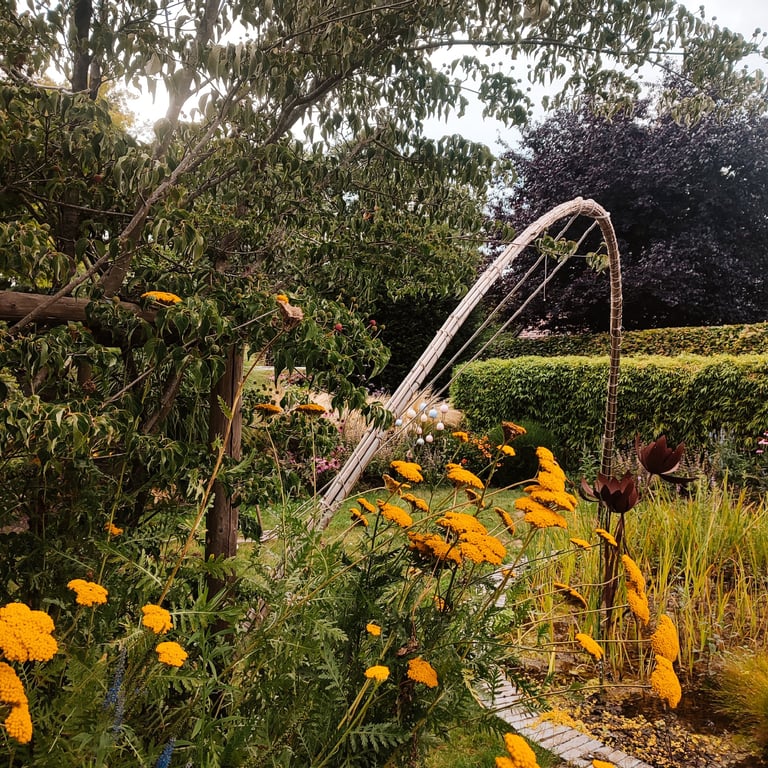
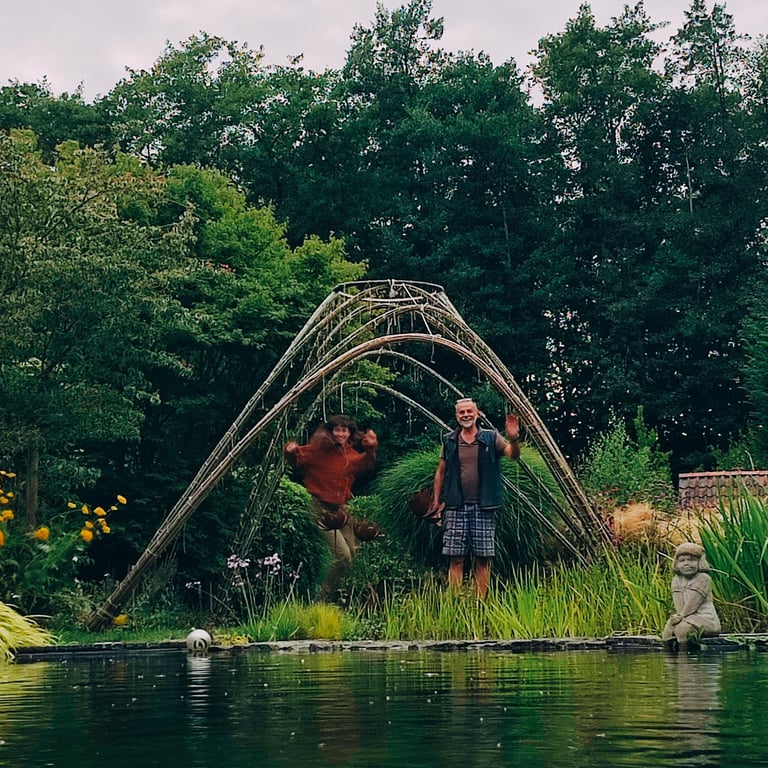
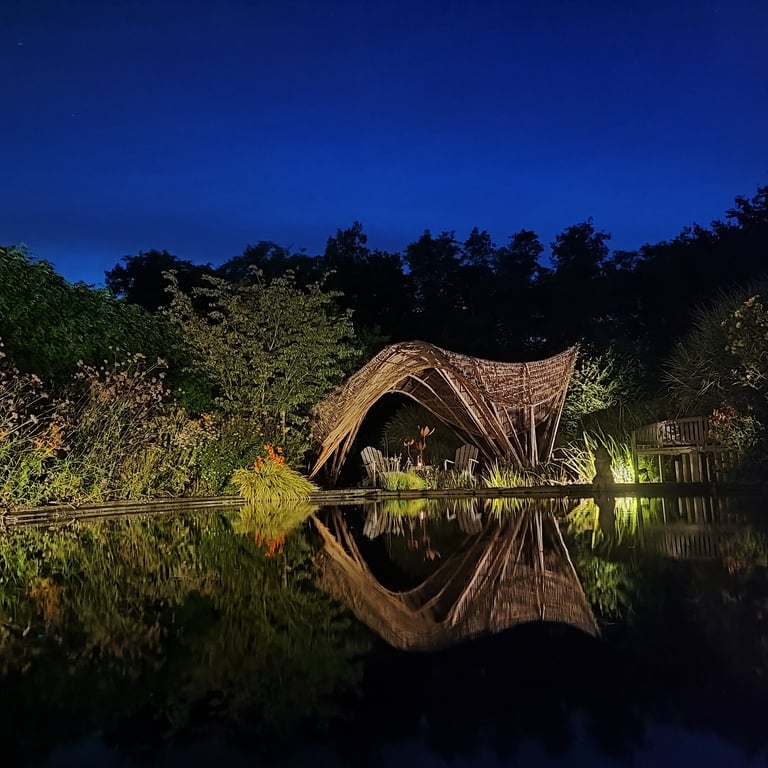
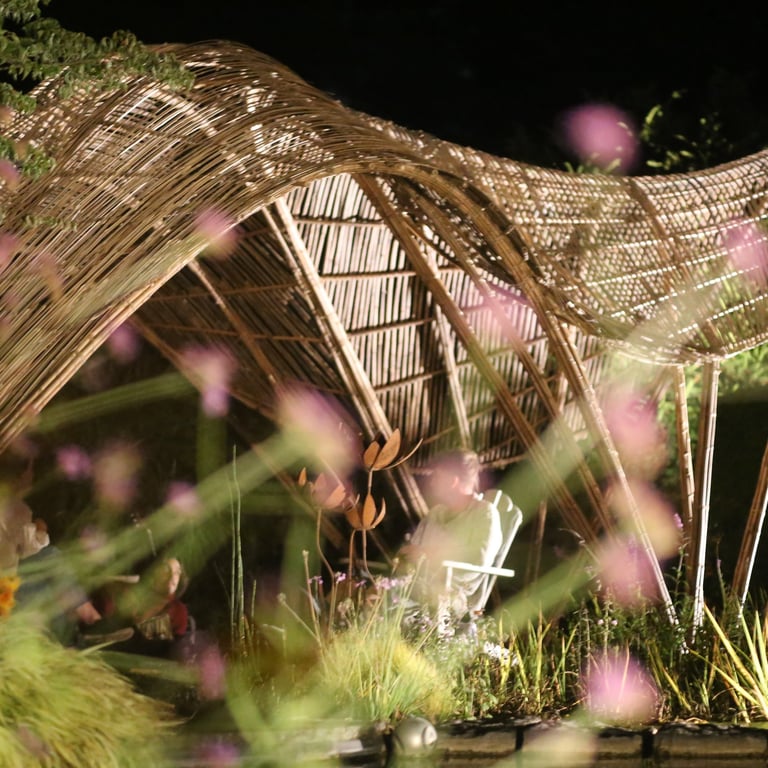
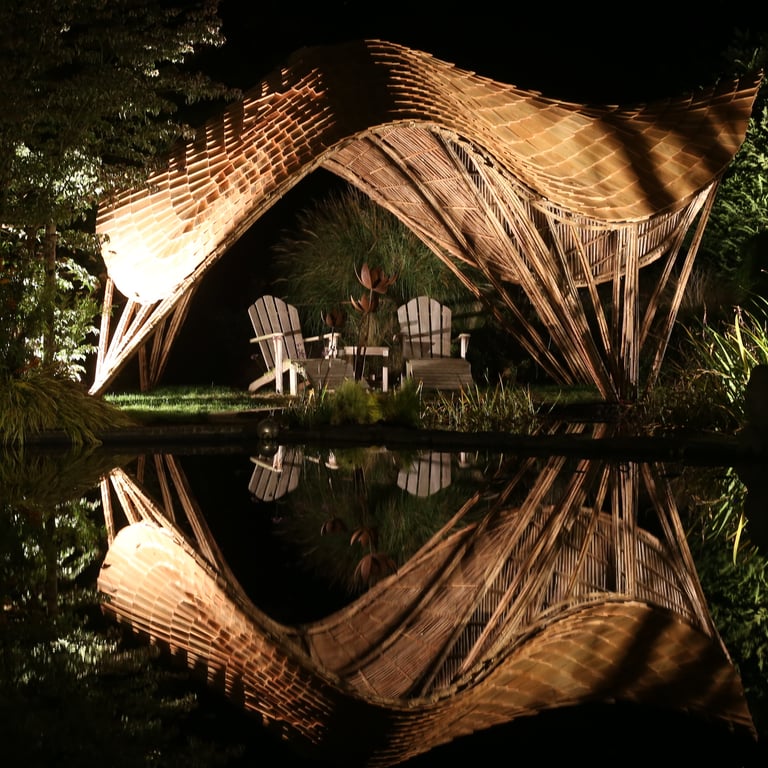
This nest was intended to be a place for slowly waking up. Located toward the back of the garden and surrounded by the songs of birds, it invites a calm, meditative state as morning sunlight reflects off the water and plays across the ceiling. For me, it is essential that architecture does not shout to claim its space, but behaves in a humble, harmonious way. In this project, the garden and the structure are designed to feel as one.
Spatial Dialogue
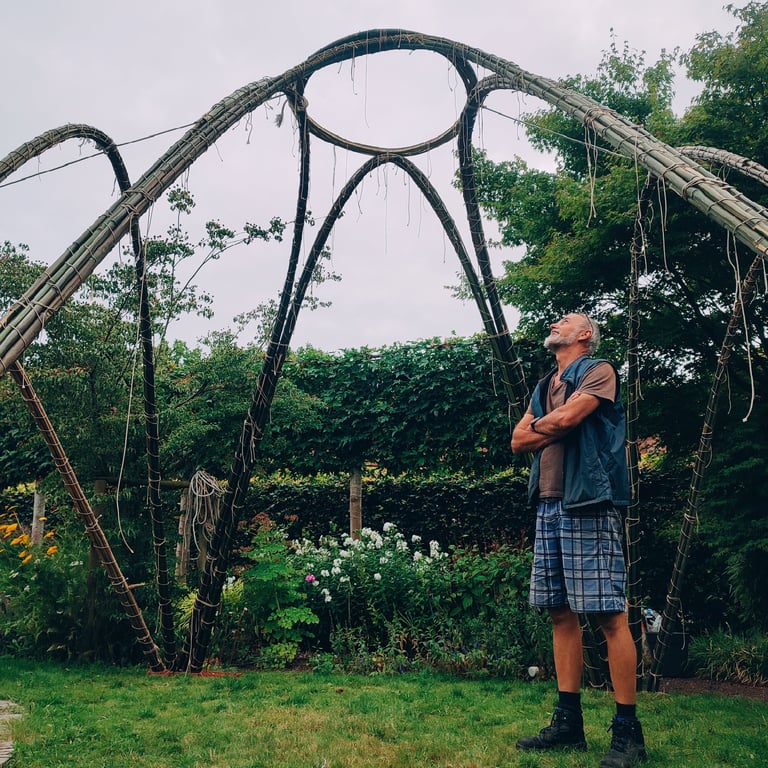
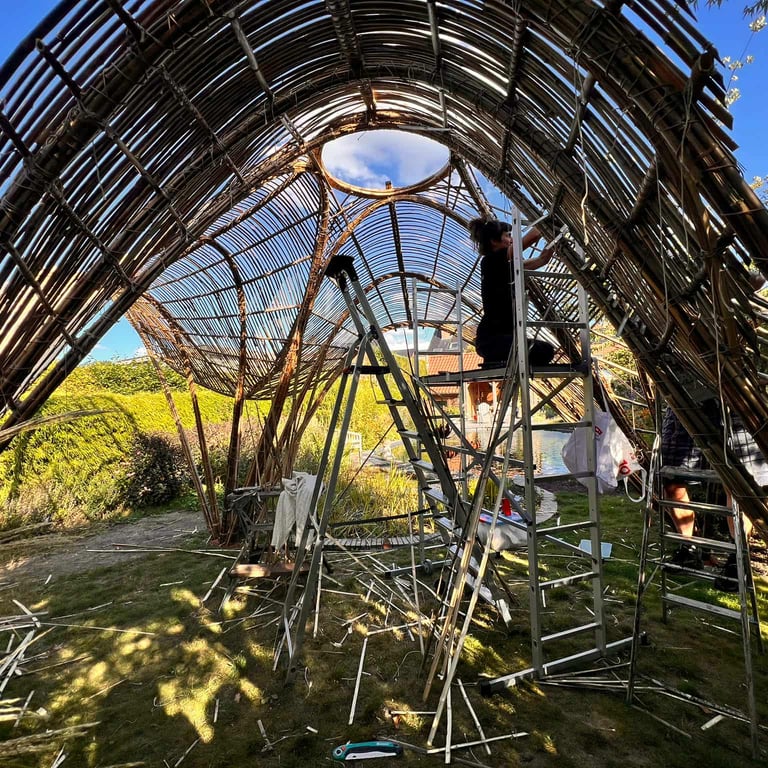
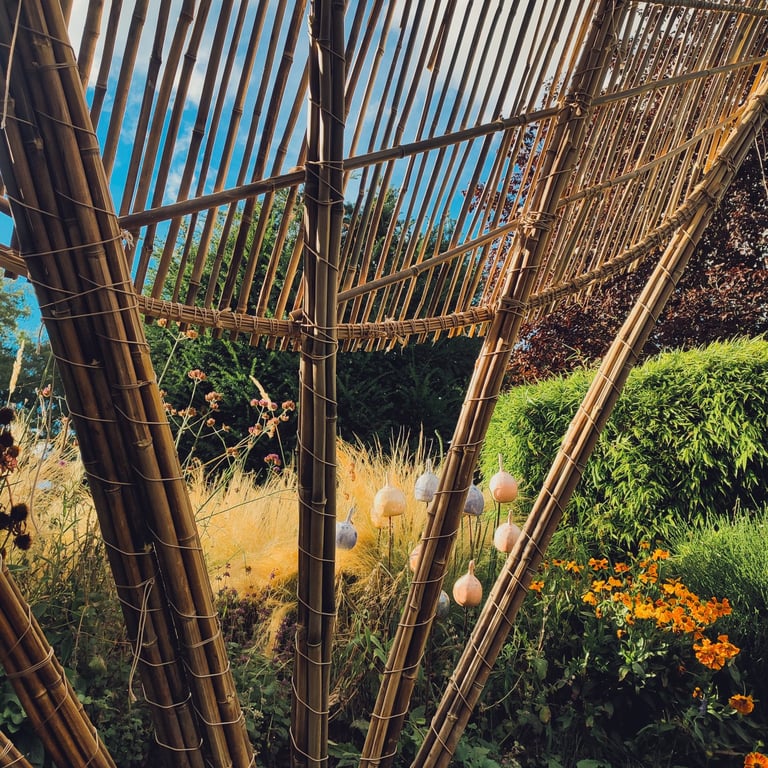
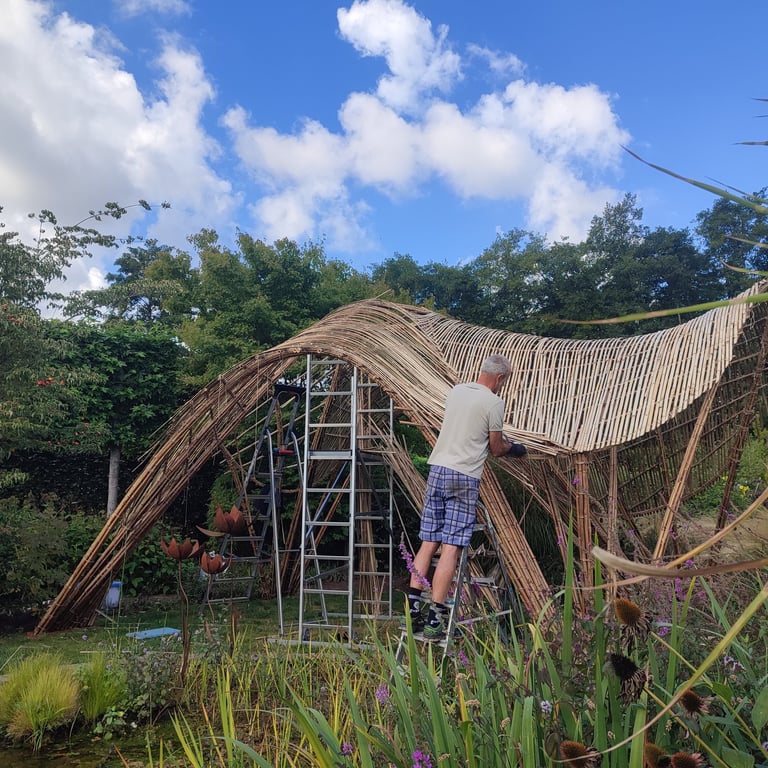
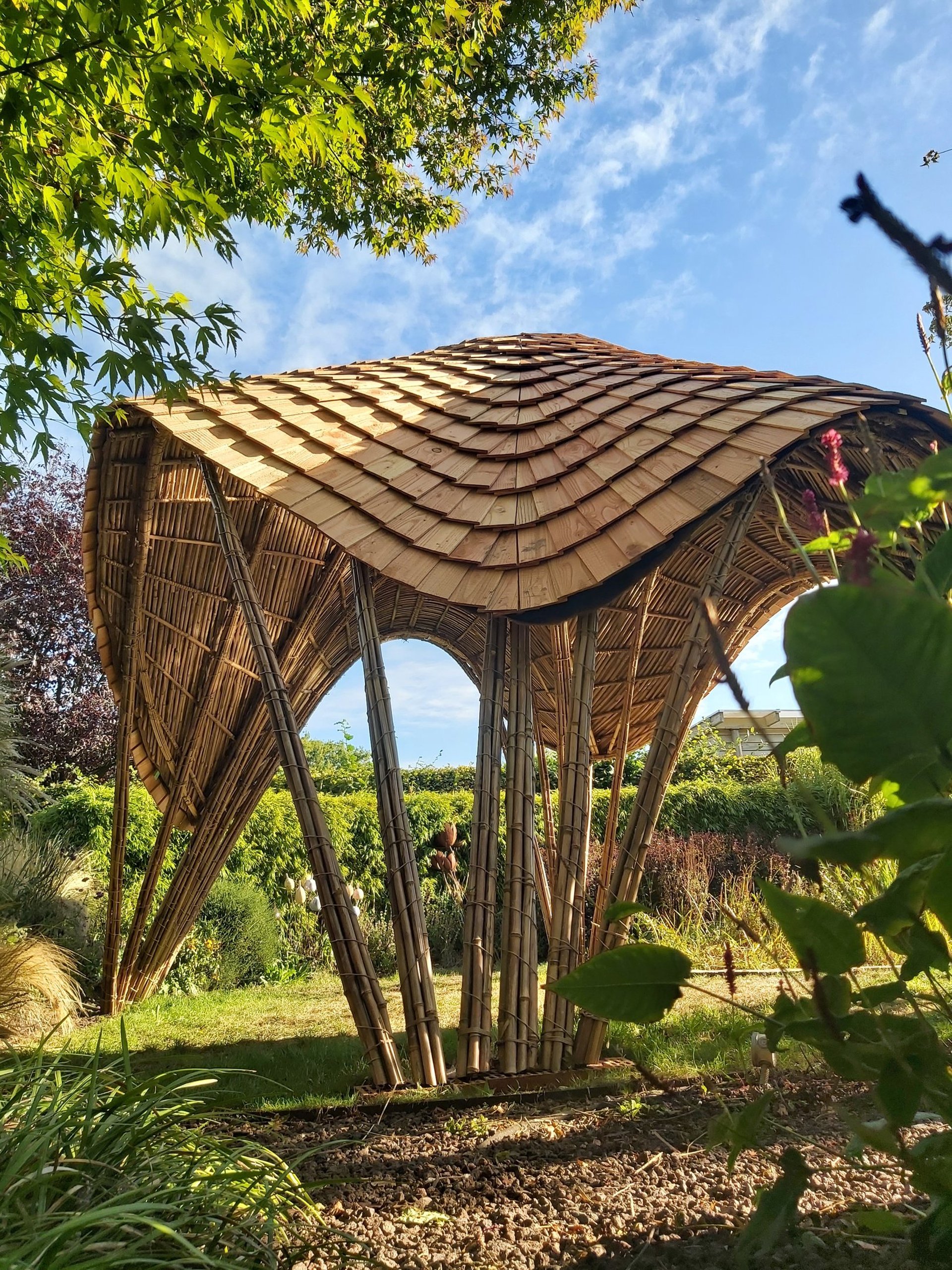
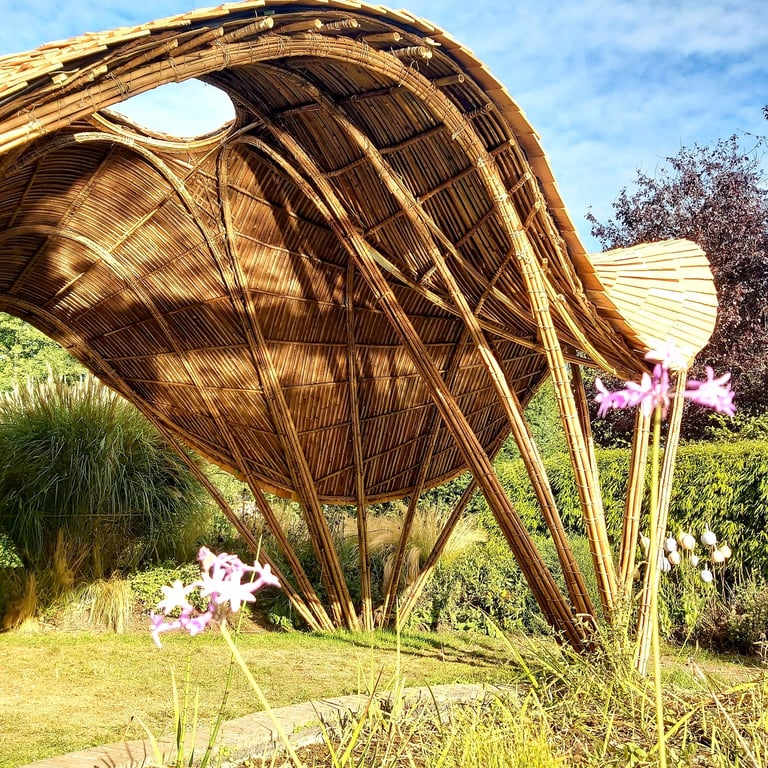
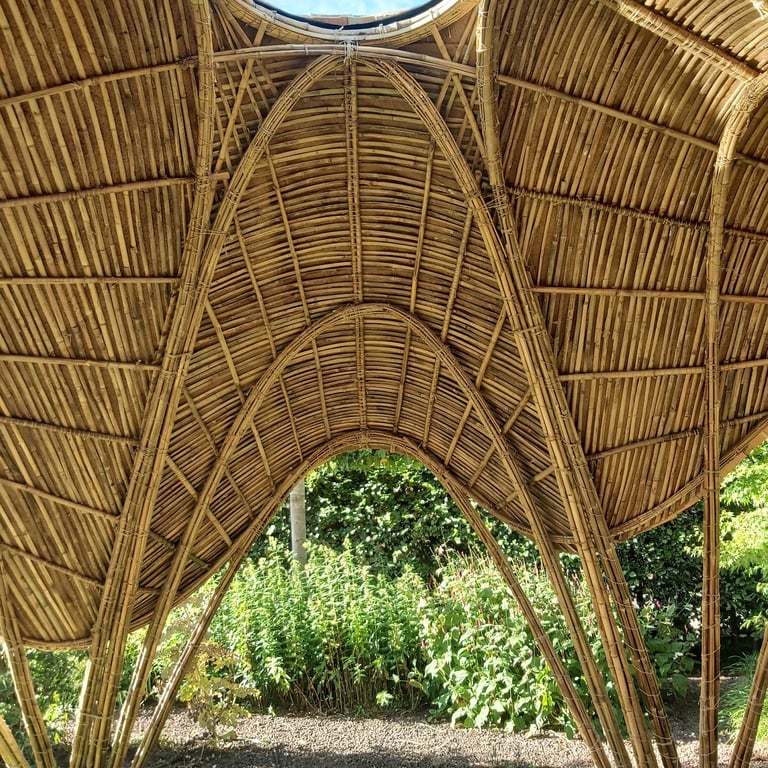
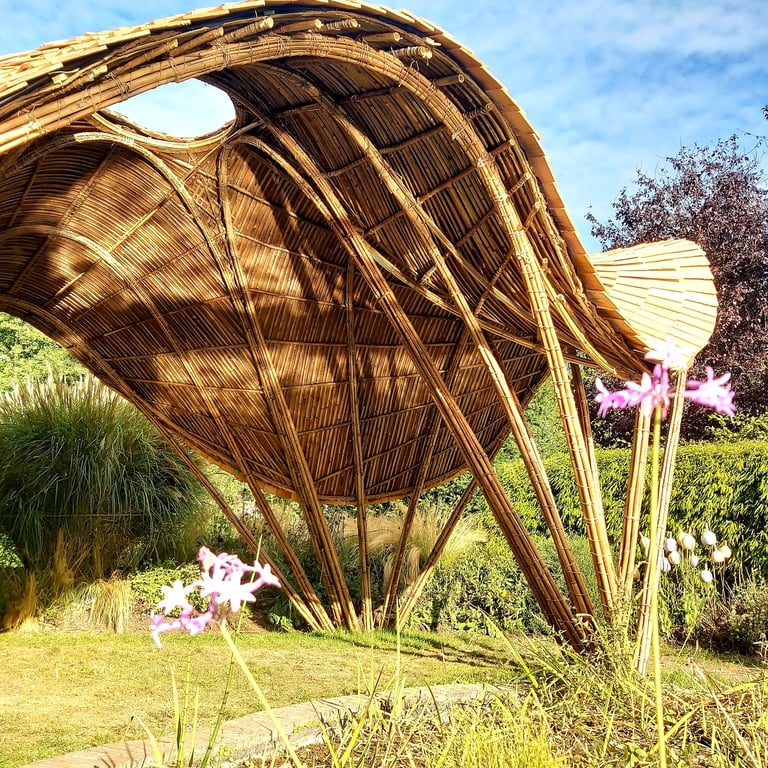
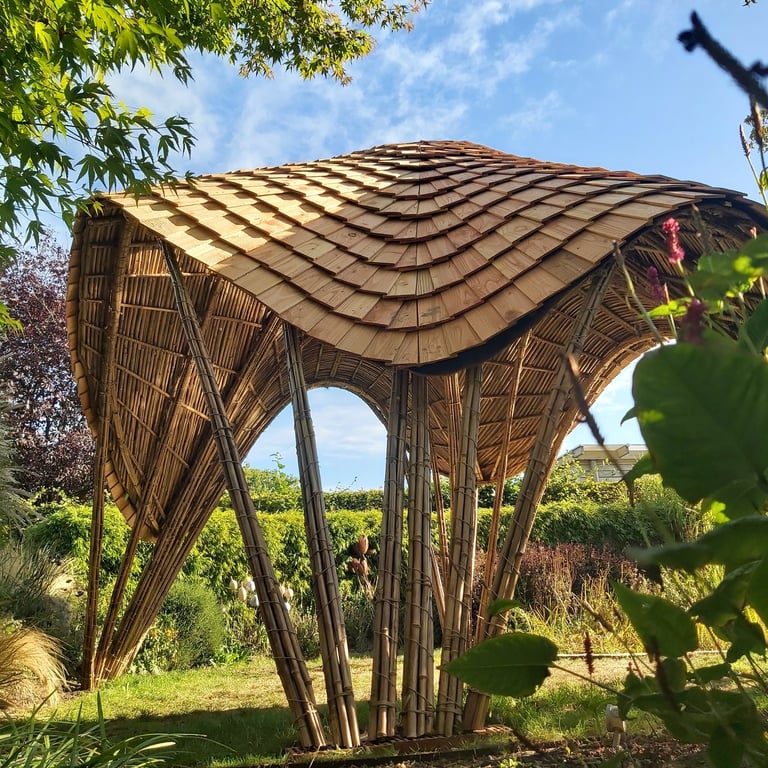
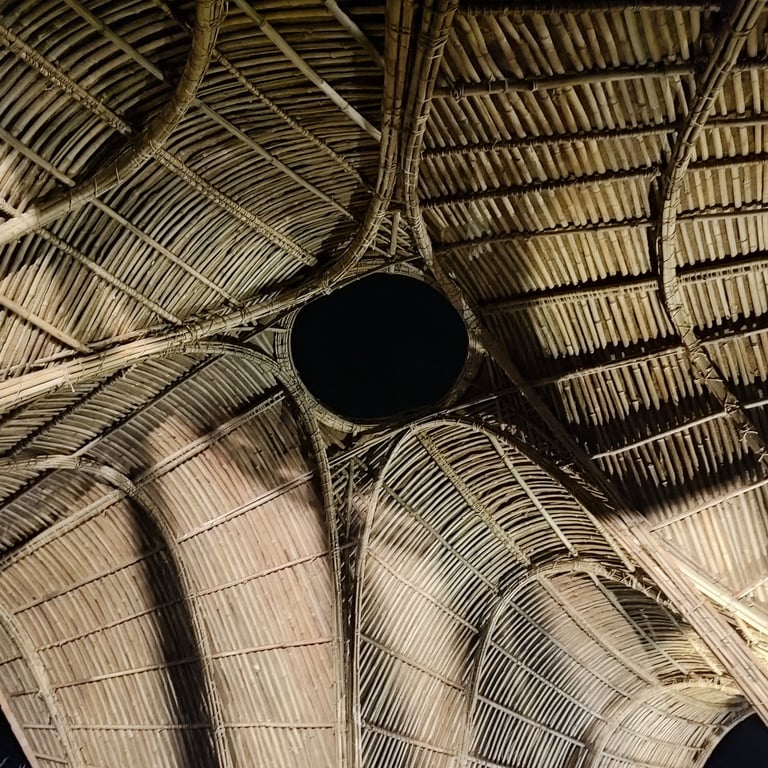
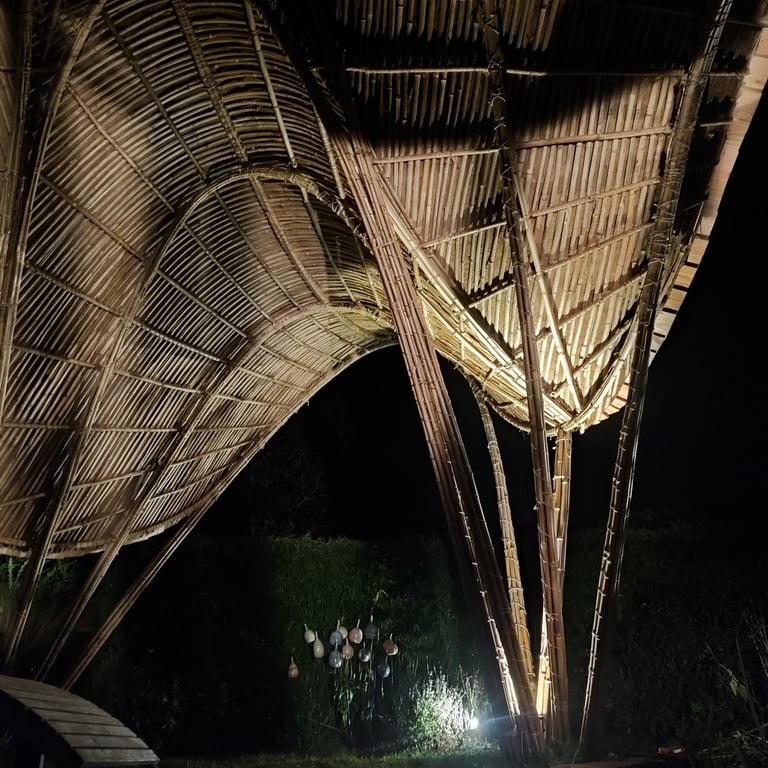
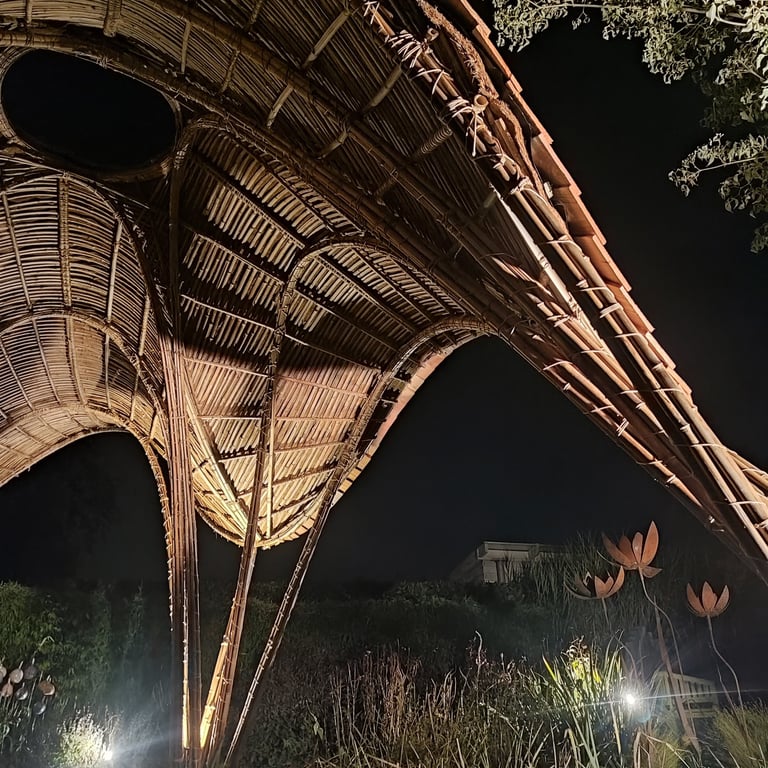
The structure is composed of four asymmetrical entrance gates, each framing a distinct view into the garden. This asymmetry follows existing site lines and preserves key sightlines toward the horizon of the garden, creating a dynamic spatial sequence and a gradual dialogue between interior and exterior. A central roof opening allows soft daylight to enter, while the orientation was specifically chosen to capture the morning light. Reflections from the nearby natural pond animate the interior, producing a calm and poetic atmosphere.
Roots and Inspiration
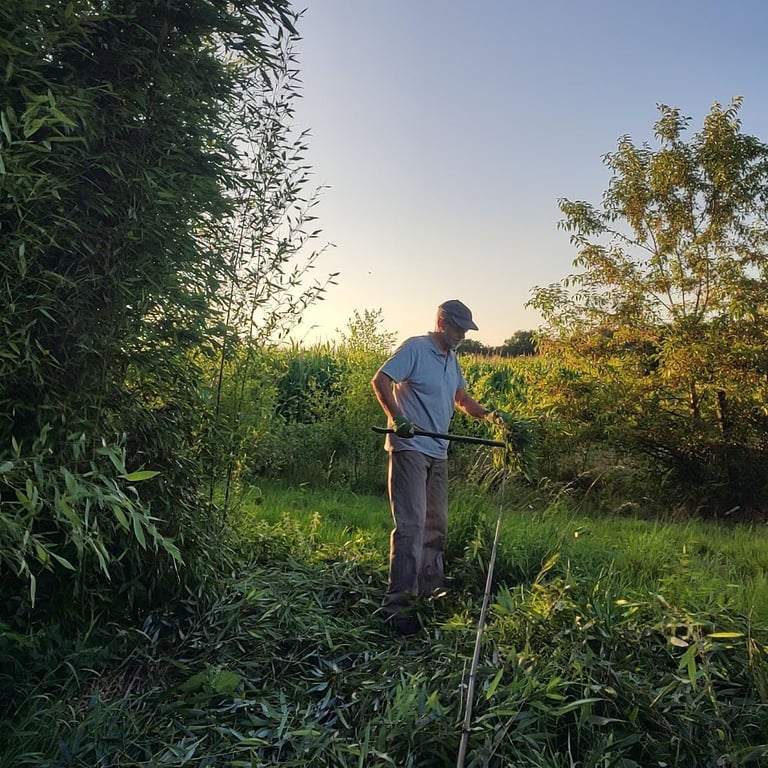
Spirit Bird was realized within the garden where Charlotte, the founder of ONE NEST, grew up. The design was inspired by her mother’s favorite song, Spirit Bird by Xavier Rudd. From an early age, Charlotte’s father demonstrated the possibilities of creating with intention and care. Having built his own house and cultivated a rich ecosystem, he shaped her understanding of construction as a process rooted in patience, observation, and respect.
A Gift of Gratitude
I am deeply grateful to have built this “nest” within the home my parents created. In doing so, I hope to have given something back to them: a space that reminds them of beauty, peace, and quiet reflection.
Design: Charlotte Dubois
Build: Charlotte Dubois & Ludo Dubois, with support from Mattijs Peeters & Quinten van den Broeck
The building process
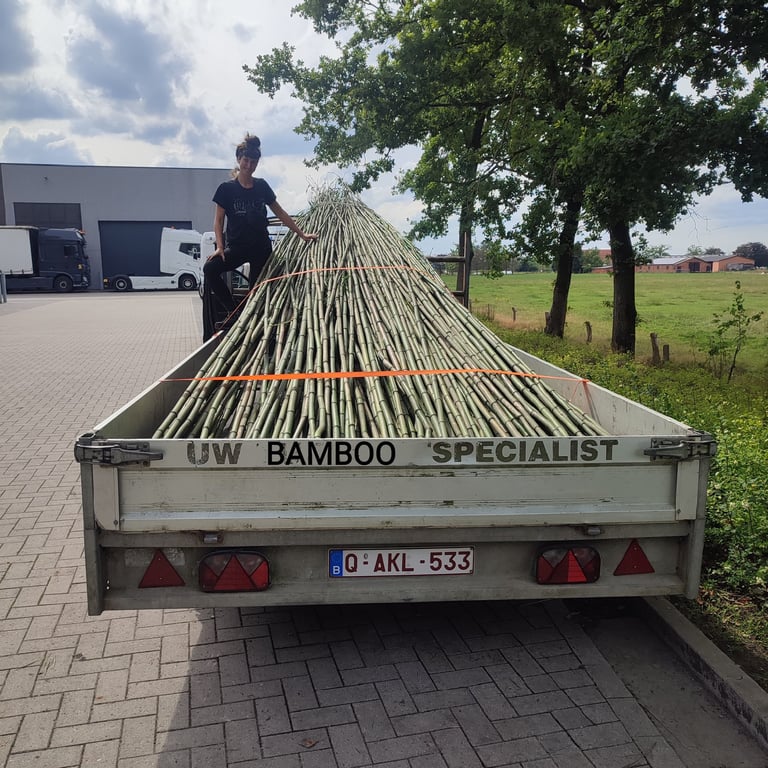
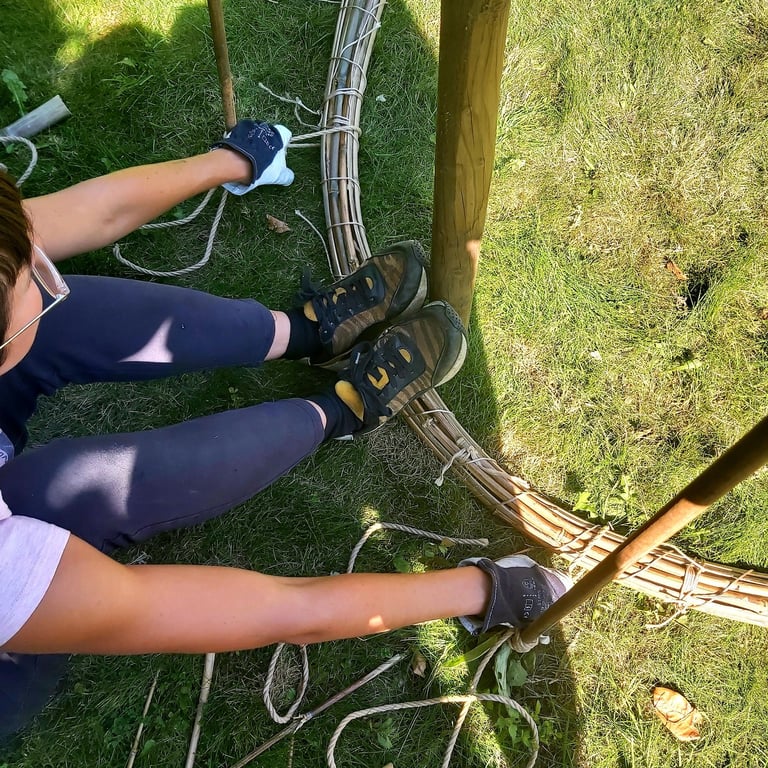
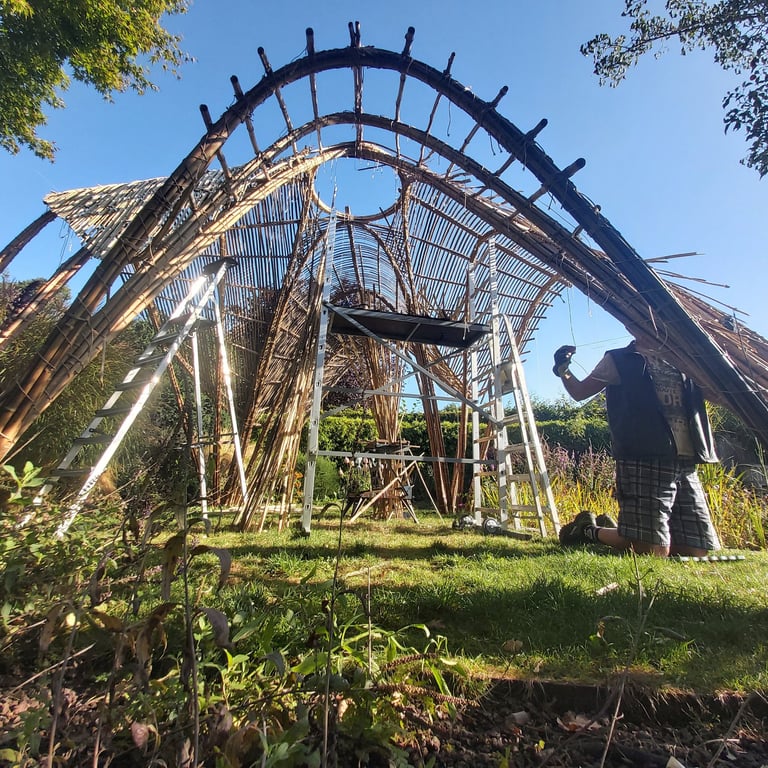
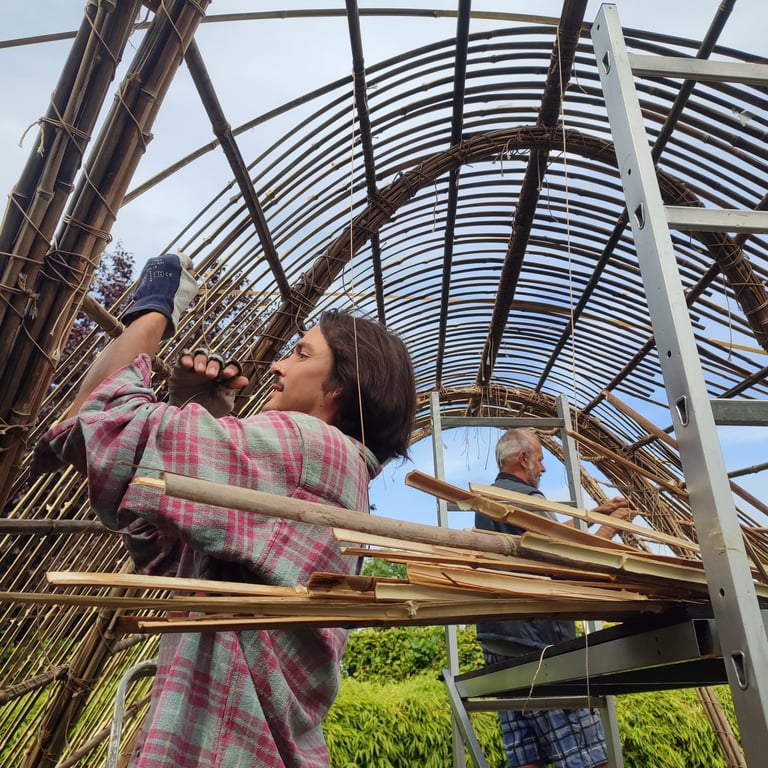
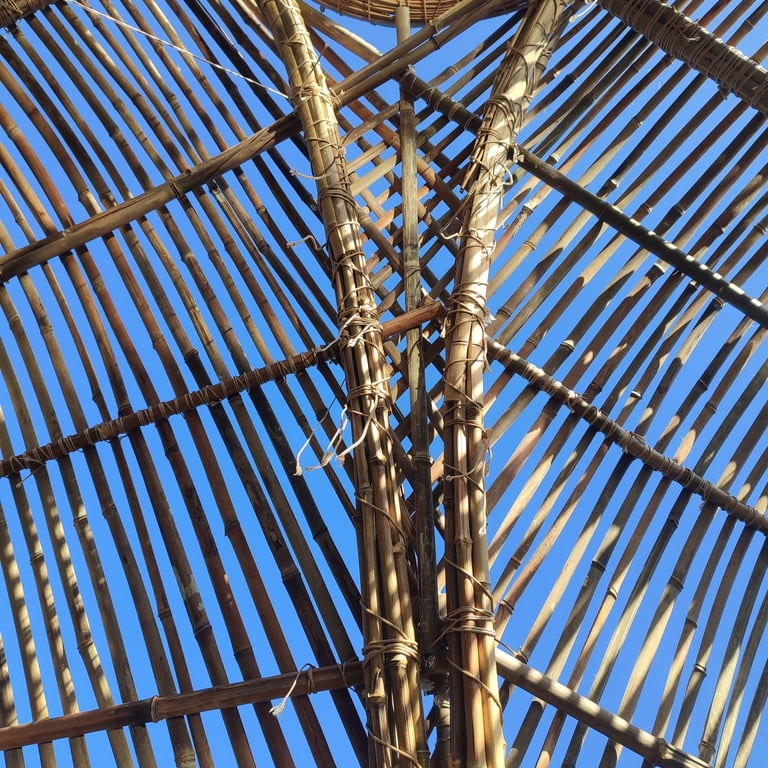
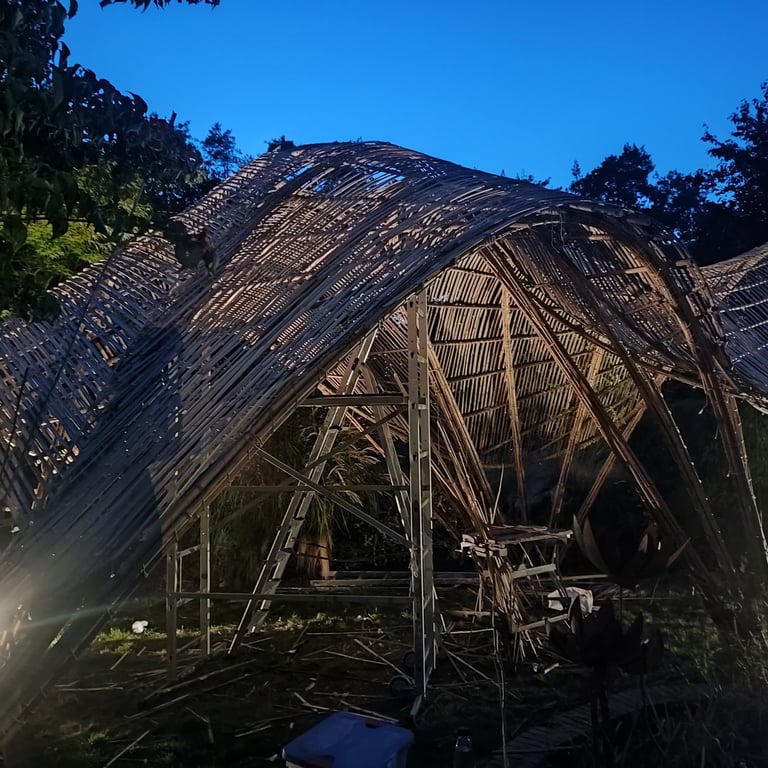
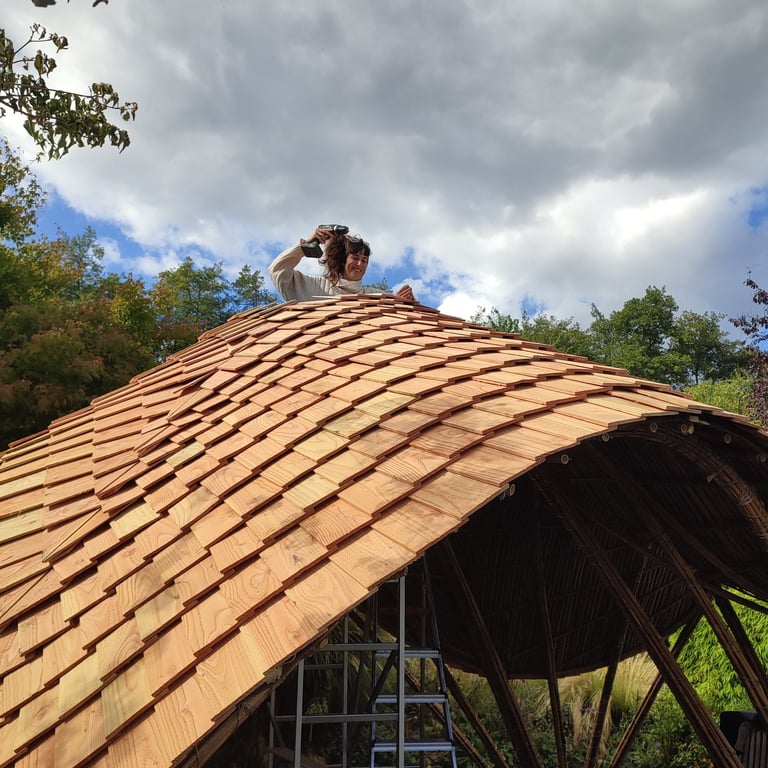
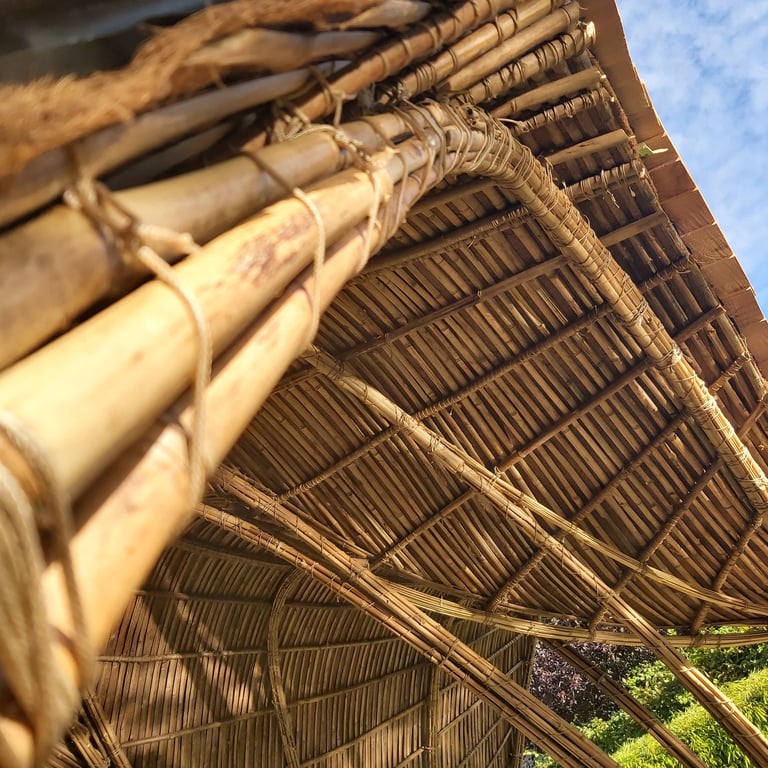
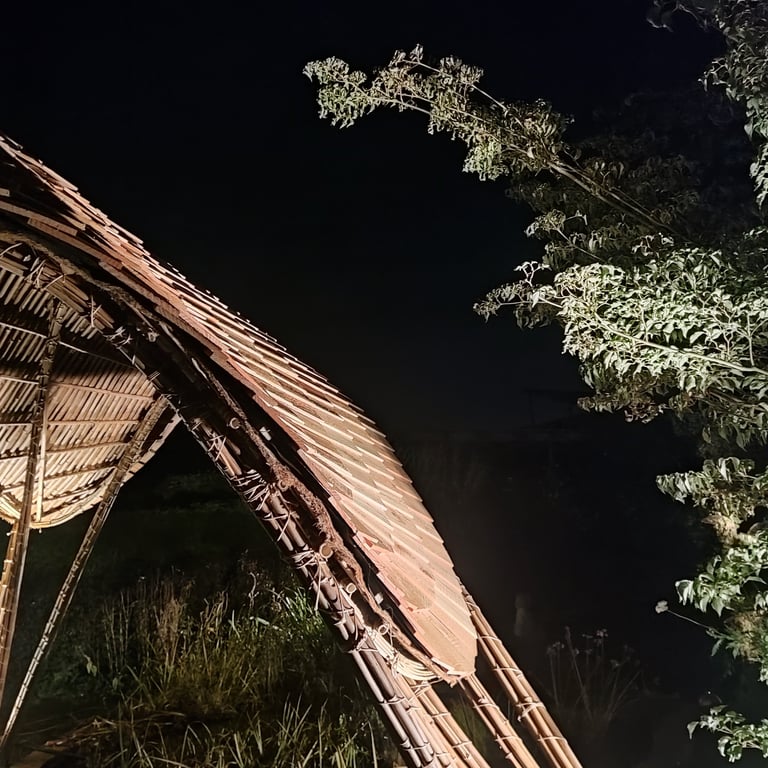
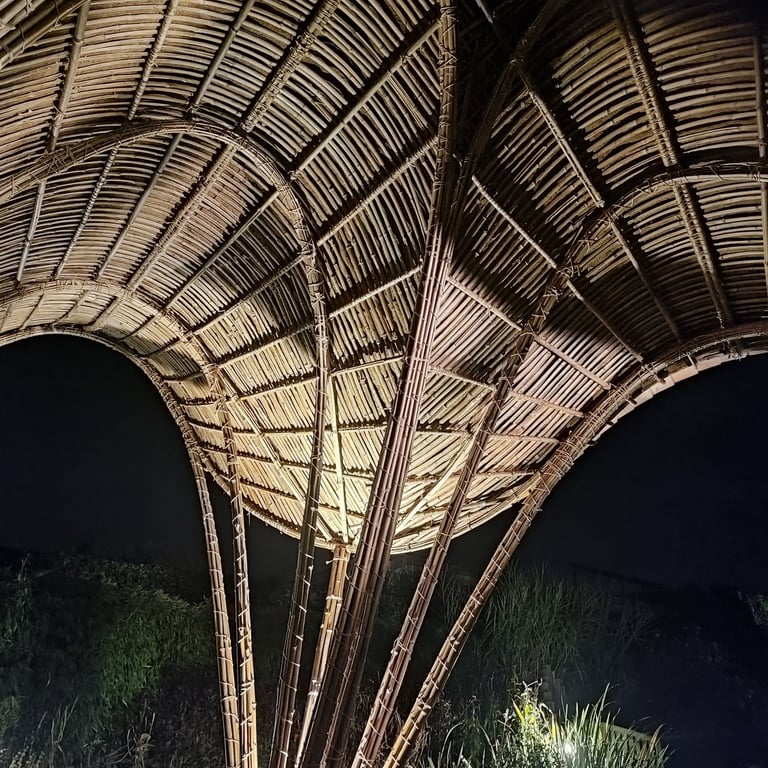
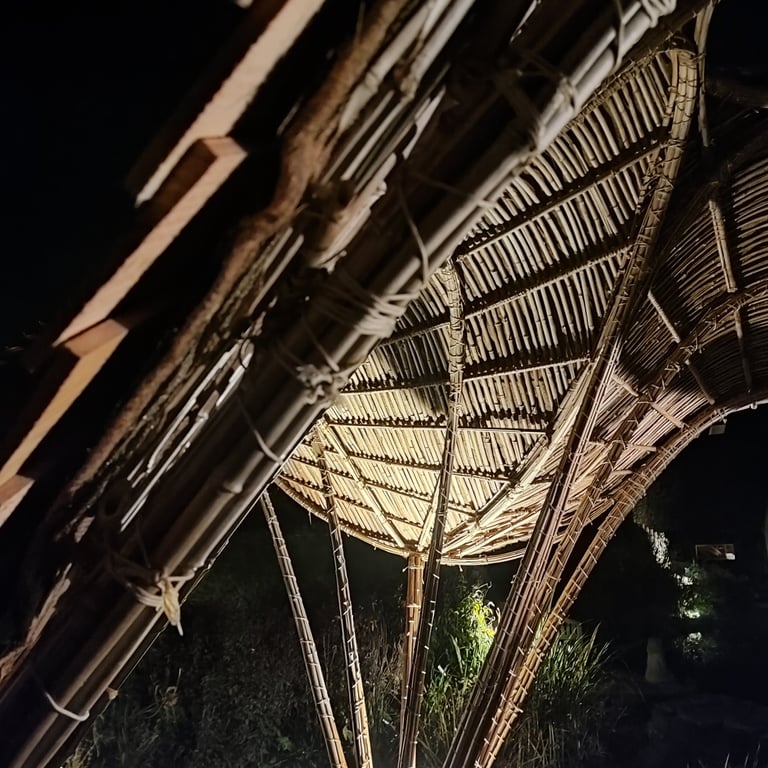
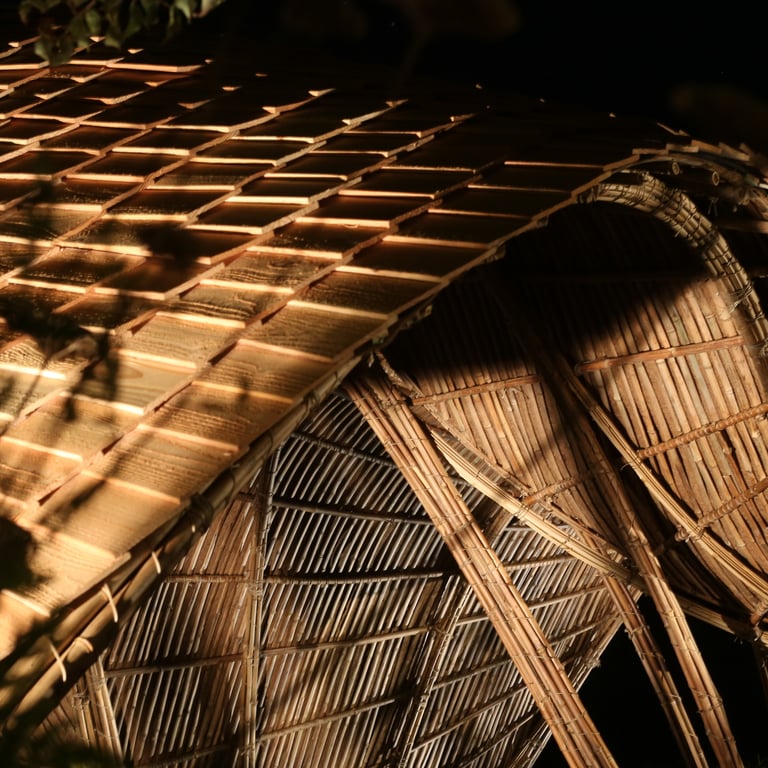
The main structure consists of thirteen arches, interconnected by bamboo ribs or “nerves.” Bamboo splits span across these ribs, forming a continuous surface that supports the roof. This realization followed an adaptive building process; rather than relying solely on predetermined calculations, the design evolved through hands-on experimentation informed by the natural behavior of the material.
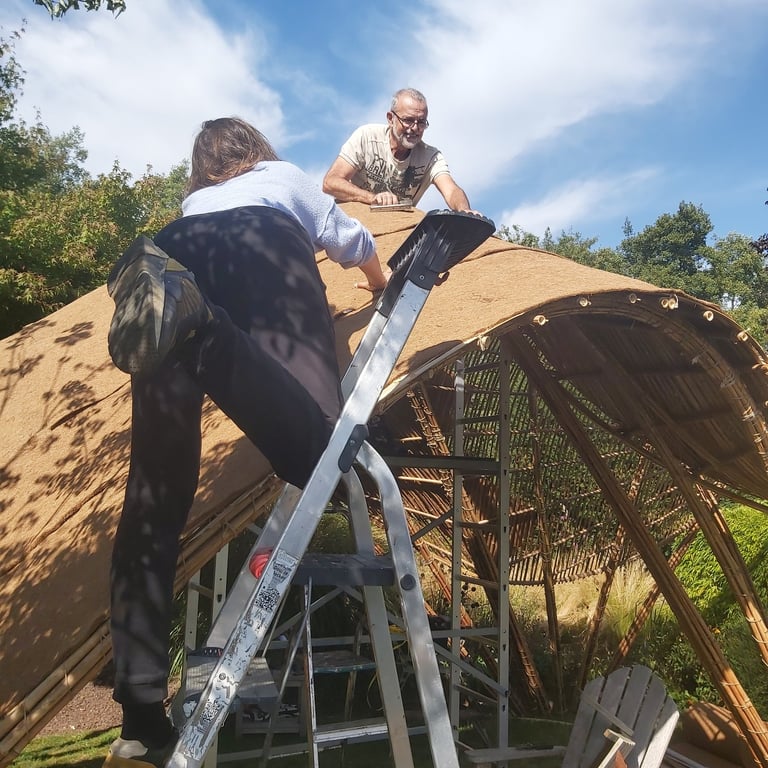
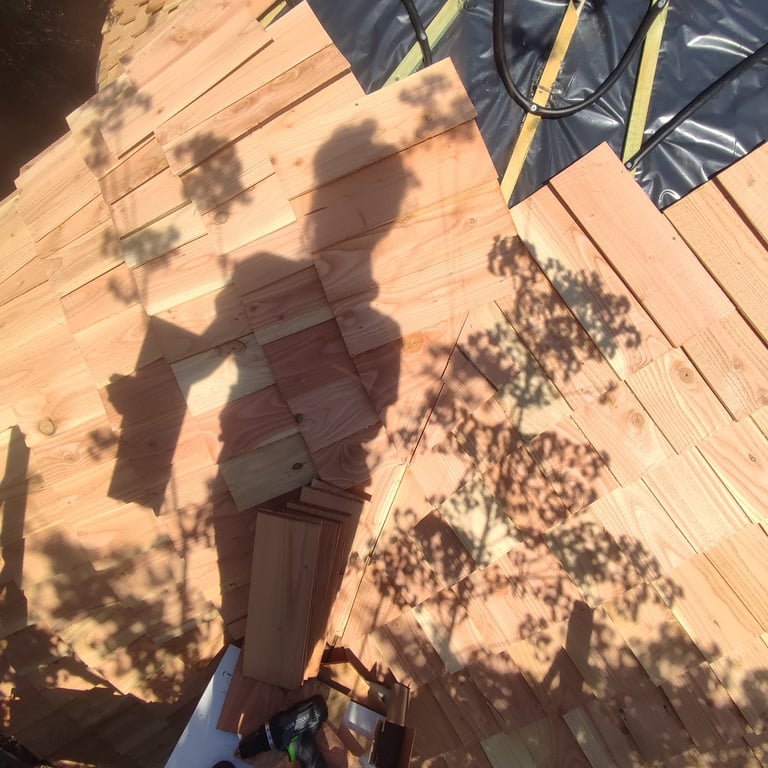
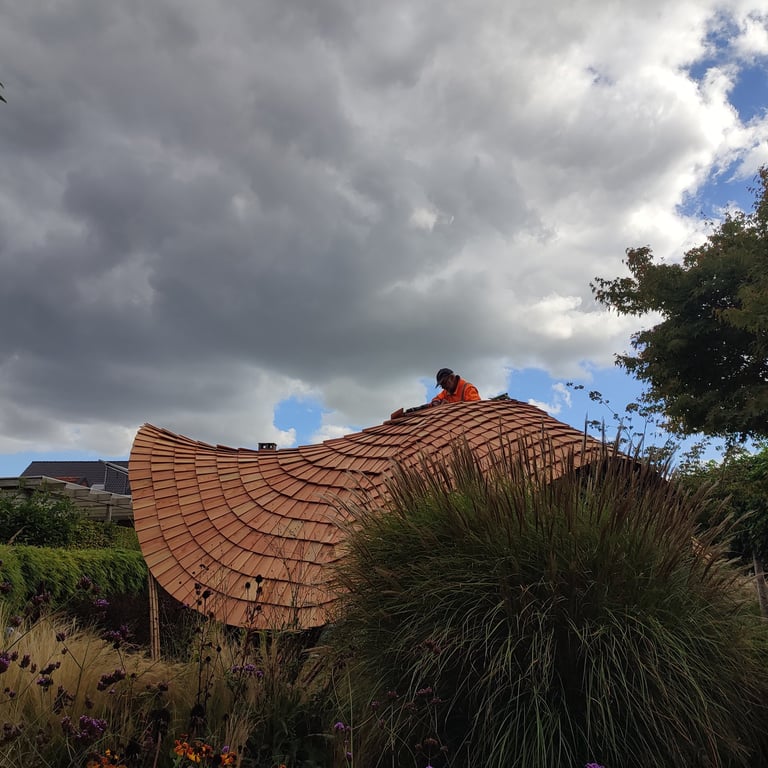
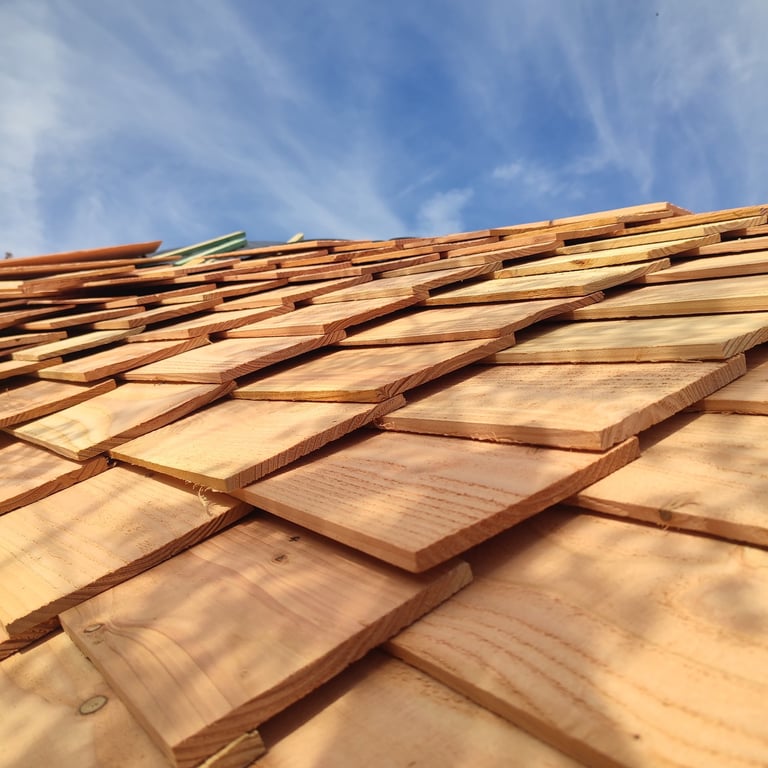
The interior is finished with natural coconut fibre, while a waterproof membrane and wooden shingles protect the structure. This gives the exterior a textured, layered appearance reminiscent of bird feathers, further bridging the gap between architecture and the living world.